hi Adam. All these shear valves appear to be placed about six or 8 inches above grade. Bad! They should be flush with grade so if a car strikes the dispenser the shear valve will actually shear. Those funny, vertical square tubings are all but a confession to the crime.
The shear valve does not have ankigh support to remain solid if the pump where be struck by a vehicle or pulled over by a hose. Most likely the shear valves in this picture would just be carried with the pump resulting in a partial crack and fuel spill, or a major release of fuel.
1- What you are looking at: The most severe issue is the cracked black component on the top of the right-most fuel line. This is part of the emergency shear valve assembly.
Why it is a safety issue: A shear valve is a critical safety device designed to automatically shut off fuel flow from the underground tank if the dispenser is struck or knocked over. The visible fracture indicates this component has failed and lost its structural integrity. This creates multiple immediate risks:
Imminent Fuel Leak: The cracked valve could fail completely at any moment, causing a high-volume, uncontrolled release of fuel within the dispenser cabinet.
Fire and Explosion Risk: Fuel leaking into the dispenser housing will create a concentrated, flammable vapour atmosphere. Any spark from the dispenser’s internal electrical components (motors, lighting, card readers) could trigger a catastrophic fire or explosion.
Failed Emergency System: In its current state, the shear valve will not function as intended during a vehicle impact, defeating a primary safety control for preventing major spills and fires.
Environmental Contamination: A leak from this failure point will contaminate the surrounding soil and potentially groundwater, constituting a serious environmental incident that requires mandatory reporting and remediation.
2- Secondary Hazard: Widespread Corrosion
What you are looking at: There is significant rust and corrosion on numerous threaded pipe fittings and unions throughout the assembly.
Why it is a safety issue: Corrosion degrades the integrity of the pipework, weakening the metal and creating potential leak paths. While not as immediately critical as the fractured valve, corroded fittings are a common cause of slow leaks, which also contribute to environmental contamination and fire risk over time.
Required Immediate Actions
This situation requires immediate intervention to prevent a major incident.
1- Isolate and De-energize: The affected dispenser must be immediately shut down, isolated from the fuel supply (e.g., by closing the submersible turbine pump’s isolation valve), and electrically de-energized at the distribution board.
2- Barricade the Area: The dispenser and surrounding area should be barricaded to prevent customer use and vehicle access.
3- Contact a Licensed Technician: A qualified and licensed petroleum technician must be engaged immediately to assess the damage and replace the failed components.
4- Do Not Operate: The dispenser must not be returned to service until it has been professionally repaired, tested, and certified as safe and compliant with all relevant standards (such as AS 4897).
This is a clear failure to maintain critical safety equipment and constitutes a breach of both environmental protection and work health and safety laws .
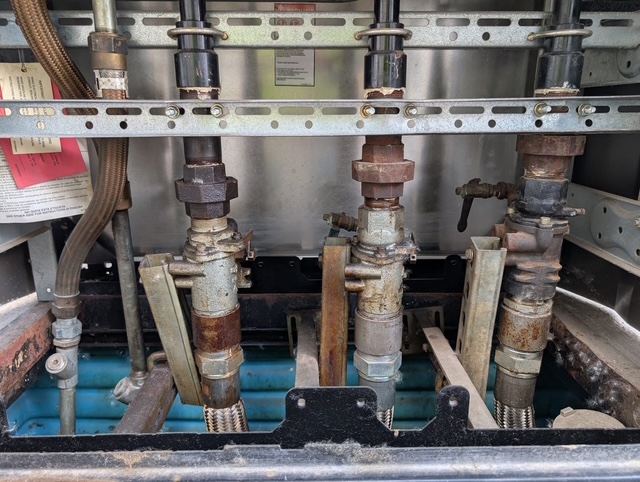

It looks like the mount on the left is bent and not installed properly.
hi Adam. All these shear valves appear to be placed about six or 8 inches above grade. Bad! They should be flush with grade so if a car strikes the dispenser the shear valve will actually shear. Those funny, vertical square tubings are all but a confession to the crime.
The shear valve does not have ankigh support to remain solid if the pump where be struck by a vehicle or pulled over by a hose. Most likely the shear valves in this picture would just be carried with the pump resulting in a partial crack and fuel spill, or a major release of fuel.
Thanks Isaac. Exactly.
Primary Hazard: Fractured Shear Valve / Riser
1- What you are looking at: The most severe issue is the cracked black component on the top of the right-most fuel line. This is part of the emergency shear valve assembly.
Why it is a safety issue: A shear valve is a critical safety device designed to automatically shut off fuel flow from the underground tank if the dispenser is struck or knocked over. The visible fracture indicates this component has failed and lost its structural integrity. This creates multiple immediate risks:
Imminent Fuel Leak: The cracked valve could fail completely at any moment, causing a high-volume, uncontrolled release of fuel within the dispenser cabinet.
Fire and Explosion Risk: Fuel leaking into the dispenser housing will create a concentrated, flammable vapour atmosphere. Any spark from the dispenser’s internal electrical components (motors, lighting, card readers) could trigger a catastrophic fire or explosion.
Failed Emergency System: In its current state, the shear valve will not function as intended during a vehicle impact, defeating a primary safety control for preventing major spills and fires.
Environmental Contamination: A leak from this failure point will contaminate the surrounding soil and potentially groundwater, constituting a serious environmental incident that requires mandatory reporting and remediation.
2- Secondary Hazard: Widespread Corrosion
What you are looking at: There is significant rust and corrosion on numerous threaded pipe fittings and unions throughout the assembly.
Why it is a safety issue: Corrosion degrades the integrity of the pipework, weakening the metal and creating potential leak paths. While not as immediately critical as the fractured valve, corroded fittings are a common cause of slow leaks, which also contribute to environmental contamination and fire risk over time.
Required Immediate Actions
This situation requires immediate intervention to prevent a major incident.
1- Isolate and De-energize: The affected dispenser must be immediately shut down, isolated from the fuel supply (e.g., by closing the submersible turbine pump’s isolation valve), and electrically de-energized at the distribution board.
2- Barricade the Area: The dispenser and surrounding area should be barricaded to prevent customer use and vehicle access.
3- Contact a Licensed Technician: A qualified and licensed petroleum technician must be engaged immediately to assess the damage and replace the failed components.
4- Do Not Operate: The dispenser must not be returned to service until it has been professionally repaired, tested, and certified as safe and compliant with all relevant standards (such as AS 4897).
This is a clear failure to maintain critical safety equipment and constitutes a breach of both environmental protection and work health and safety laws .
Thanks Hamed. And maybe thank ChatGPT? LOL