Our Connecticut Class A/B Course is Approved and Online

Our Connecticut Class A/B Course is Approved and Online
Great News! Our online Class A/B UST Operator Training course has been approved by the Connecticut Department of Energy and Environmental Protection (DEEP) and is available for purchase now. Check it out!
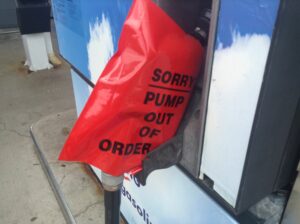
Large Overfill in PA Impacts School
Last week I was literally telling a classroom full of of UST operators that UST overfills aren’t that common anymore when someone emailed this article.
Delco school grounds dug up after thousands of gallons of gasoline spill from gas station
So right after the break I had to inform that class that indeed overfills still do happen. I’m not used to seeing such a terrible set of circumstances (massive overfill, dead fish, polluted school grounds) since the early 1990’s.
I’m not exactly sure how this happened, or why it took so long for the PA DEP to be notified. But stay tuned for details as I try to figure it out. The last thing you want is to end up on this blog post 🙂
7/28/2021 Update: Fuel delivery driver charged in massive, ‘intentional’ Delco gas spill, DA says
PLLD Shut Down Alarm Means….What?
UST Operators who have been properly trained know to look out for alarms on their ATG or Automatic Tank Gauge. But one alarm on the Veeder Root TLS 350 has caused some confusion over the years: PLLD Shut Down.
What does it mean? The answer might surprise you. Check out the humorous video our friends at Canary Compliance put together to explain.
Have an alarm that doesn’t make sense? Sign up for our Virtual Tank Savvy Talk on Fridays and have the UST experts explain. Register today.
Need UST Inspector Training?
When he’s not training Class A/B courses around the country, Ben Thomas of UST Training has been busy this year doing live webinars for State and Federal UST inspectors. Webinars have been a simple solution to address the challenges of travel in the time of Covid.
Ben recently provided live webinars for EPA Region 10 (Alaska, Washington, Oregon and Idaho) and EPA Region 3 (Pennsylvania, Maryland, DC, Delaware, West Virginia and Virginia). Some lessons were for beginners and some were for advanced inspectors. For Region 10, Ben invited veteran service tech Don Reeves of Mascott Equipment to offer real-world field tech perspectives. Likewise, Ed Kubinsky of Crompco, a well respected service tech, speaker and PEI RP committee member, spoke to Region 3 inspectors and offered a “boots on the ground” view about the problems and successes of implementing all the new tests.
Feedback from the recent EPA Region 3 class:
I appreciated the multiple perspectives that each presenter brought to the webinar. The experiences from the field are a valuable insight for a person on the regulator side.
Ben and Ed were very knowledgeable, and their experience in this field over the years provided great insight!
I enjoyed the way things were broken down as simple as it was for things that can be so technical.
I liked that you used lots of photos and explained what we were seeing…also the smoothness of the presenters….it wasn’t boring….
Ben is one of the few operator trainers that also trains UST inspectors as well. And he works with regional service technical experts to make sure his audience doesn’t just know the UST rules but is able to get invaluable field perspectives.
Want your own inspector webinar? Contract Ben at 866-301-8265 or [email protected]

There’s a New Sump Test in Town: Meet Dri-Sump
Can a fog machine and lasers find leaks in containment sumps? Read more.
UST Training recently collaborated with Dri-Sump to provide refresher training to Montana licensed UST workers. We were very impressed with some new sump testing technology so we’d like to share it with you.
“Developed by AC’CENT Environmental Services, Inc., Dri-sump® is an EPA-approved containment-tightness testing technology that delivers digitally recorded pinpoint testing accuracy to 0.05 gph in just 60 seconds and uses no water and creates zero waste.Instead of water, the system uses a food-grade, pH-neutral, non-petroleum vapor aerosol that is injected into the sump, filling a 300-gallon sump in 10-15 seconds; after the test, the vapor dissipates in about 10 minutes. After injecting the aerosol vapor, an air generator “pulls” the gases from the sump into a viewing chamber that is connected to a Vapor Stimulator Tube (VST), where a laser is introduced. If the viewer sees a green laser “dot,” there is no leak and the sump passes the test. If a green “line” is observed, a leak has been detected.”
As you know from your training, UST operators need to tightness test their sumps and spill buckets every three years. And conventional hydrostatic testing, involving managing large quantities of potential oily test water, can be expensive.
Want to learn more? Contact Dri-Sump and learn more about this new test method.
2021 Trade Shows Begin This Week
After a year of no travel, the team at UST Training is excited to be back on the road attending a number of petroleum trade shows around the country. For a complete list of shows we’ll be at click here.
We are cautiously optimistic that with widespread vaccinations, proper masking and social distancing, and a bit of faith and courage, folks will be able and willing to attend these important events. Hope to see at some of these show soon!
Want to meet Ben or Tammy at one of these shows and talk about Class A/B or C UST operator in person? Call us to set up an appointment at 866-301-8265 or [email protected]
And see you at the show!
Creative Ideas for UST Operator Training
Online training for doesn’t have to be a boring or lonely exercise.
We recently helped a company set up a Class A/B UST operator training course in a very creative way and we wanted to share this idea to encourage you come up with inventive ways to train your team.
A c-store chain in the Midwest wanted a live class since their group of store managers was coming together for the first time since COVID-19 for a big staff meeting anyway: why not get everyone Class A/B trained on the same trip? But due to schedule conflicts (and cost), we were unable to to offer the class live. So here’s what we came up with. Employees of the company:
- Purchased a dozen or so self-paced Class A/B courses,
- Got a classroom at a local community college with enough computers for each person,
- Watched the self-paced course together and discussed each lesson as they went along.
- Took the final exam independently, and
- Invited (and this is the really cool part) a local UST state inspector to come after class and discuss the UST rules.
Don’t think you are limited by time, geography, or even normal training conventions. Think how you can make training work for your company.
Want to brainstorm how to make training work for you? Call us at 866-301-8265 or [email protected]
UST Program Timeline Now Available On EPA’s UST Website
(Ben’s note: I recently received this email from Mark Barolo from EPA and thought it was worth sharing with our UST community. I first met Mark way back in 1996 at my first national Tanks Conference and am very happy that Mark has moved into the role of the acting director of the national UST program. Mark keeps alive the spirit of EPA wanting to make sure we are all working together to keep the nation’s drinking water supplies free from leaking UST systems)
UST Colleagues, Partners, and Stakeholders:
EPA’s Office of Underground Storage Tanks developed a timeline about the national underground storage tanks (UST) program. You may access an interactive version of the timeline on EPA’s UST website at www.epa.gov/ust/milestones-underground-storage-tank-programs-history and a text version at www.epa.gov/ust/milestones-underground-storage-tank-programs-history-text-version.
Read More →
EPA Region 3 UST Resource Library
Further Resources for US EPA Region 3 Beginning and Advanced UST Inspector Training
May 24-25, 2021
Thanks UST inspectors from Pennsylvania, West Virginia, Maryland, Delaware, DC and Virginia for attending the EPA Region 3-sponsored webinar. Please feel free to use these helpful videos and national testing standards and add them to your own UST resource library.
Oregon UST Inspector Position Available
Medford, Oregon
This announcement, REQ-61984, will close on Tuesday, May 11, 2021 at 11:59 PM.
The Oregon DEQ is hiring for a UST inspector position. https://oregon.wd5.myworkdayjobs.com/en-US/SOR_External_Career_Site/job/Medford–DEQ–Stewart-Avenue/Underground-Storage-Tank-Inspector–Natural-Resource-Specialist-3-_REQ-61984. If you are an internal applicant, you can view the posting via the external applicant link, however, you must apply via your internal Workday account, which can be accessed via this link: https://wd5.myworkday.com/oregon
Please contact Mike Kortenhof at (503) 229-5474 or [email protected] with questions regarding this position.
PEI Updates
Ben Thomas of UST Training joined the Board of Directors as an Affiliate Member of the Petroleum Equipment Institute (PEI) in 2020 and recently attended his first Board meeting via Zoom. Here are some highlights and observations as summarized the PEI Tulsa Letter:
Read More →
UST Inspector Job Opening EPA Region 9
EPA Region 9’s Underground Storage Tanks (UST) Program is Hiring!
We are looking for cleanup project managers (GS 11/12) to work in the UST Program of EPA’s Region 9 Office in San Francisco, CA. These individuals will manage environmental cleanups of sites impacted by petroleum and/or hazardous contaminants across the states and tribes of the Pacific Southwest Region. These positions are advertised as “Physical Scientists/Life Scientists”, and most engineers, geologists, chemists, physicists, and biologists with the required experience will qualify. Full details on the duties, requirements, and documentation to apply are linked below.
Apply Here:
This opportunity is open to the public from 3/15/21 to 3/29/21 (8:59pm PT/11:59pm ET).
The salary range is from $78,861 to $122,884 per year and offers great federal benefits. See the USAJobs Help Center on how to get started.
Steven Linder, P.E.
Special Projects Coordinator (LND-4)
US Environmental Protection Agency Region 9
San Francisco, California
415-972-3369 – office
650-592-2000 – mobile
AZ UST Reporting Is Going Paperless this Spring
Attention Arizona Class A/B UST operators: UST Reporting Coming Soon to myDEQ
Register for a myDEQ account today and soon you will be able to:
- Easily submit a variety of UST documents online
- Receive confirmation emails and reminders so you don’t miss a deadline
- Access your facility information on one dashboard
- Securely log in to the myDEQ portal at your convenience, 24/7
US EPA Region 10 Resource Library
Further Resources for US EPA Region 10 Advanced UST Inspector Training
March 17-18, 2021
Thanks Alaska, Washington, Oregon and Idaho UST inspectors for attending the NEIWPCC-sponsored webinar. Please feel free to use these helpful videos and national testing standards and add them to your own UST resource library.
Lesson 1: Containment Sump Testing
- Dri-Sump Testing
Unique and patented method using fog and lasers. Literally.
Basic commercial video but helpful
Fogging the sump
Failed Test results
- EPA’s Low Liquid Level UST Containment Sump
Testing Procedures - RP1200: Testing of UST Spill, Overfill, Leak Detection and Secondary Containment (2019 Edition)
C-4 Containment Sump Integrity Testing Hydrostatic Testing Method
C-4-A Containment Sump Testing Low Liquid Level Test Method
C-8 Liquid Sensor Functionality Testing
Lesson 2: New Tank Monitors: How to get reports
- Veeder-Root TLS 450 Plus
The black Veeder Root console with touch screen. There are 13 one-minute videos on various topics done by Ben Thomas on his Tank Savvy Minute video series. - Veeder-Root TLS-450 Plus
A brief sensor reports video done by Veeder Root - Veeder-Root TLS-450 Plus
A brief review of Environmental Regulatory Reports done by Veeder Root. - Veeder-Root TLS 450
How to operate the briefly available gray Veeder Root console with touch screen. Done by AAFES - Veeder-Root TLS 350
The old standard Veeder Root console with buttons for navigation. There are 10 one-minute videos on various topics done by Ben Thomas on his Tank Savvy Minute video series. - Franklin EVO 550
The silver console with touch screen. There are 16 one-minute videos done by Ben Thomas on his Tank Savvy Minute video series. - RP1200: Testing of UST Spill, Overfill, Leak Detection and Secondary Containment (2019 Edition) C-7 Automatic Tank Gauge Operation Inspection
Lesson 3: Spill Bucket Testing
- Vacuum spill bucket testing
By Wheeler Tank Testing. Pretty helpful real time test. Not responsible for lack of PPE. - Hydrostatic spill bucket testing
By the Tennessee Department of Environment and Conservation - Dri-Sump spill bucket testing
Unique and patented method using fog and lasers. Literally.
Basic commercial video but helpful
Fogging the sump
Failed Test results
- RP1200: Testing of UST Spill, Overfill, Leak Detection and Secondary Containment (2019 Edition)
Lesson 4: Overfill Prevention Equipment Testing
- Overfill prevention device testing
By Commtank. Pretty basic but helpful for the big picture - RP1200: Testing of UST Spill, Overfill, Leak Detection and Secondary Containment (2019 Edition)
C-5 UST Overfill Equipment Inspection Automatic Shutoff Device and Ball Float Valve
C-6 Overfill Alarm Operation Inspection
Any questions or comments please contact [email protected] or (866) 301-8265
Statewide Solution for Class A/B UST Operator Training
UST Training, Inc. can offer your state UST program an alternative to your existing online Class A/B UST operator training at no cost to your agency. Based on our years of experience training UST operators nationwide, in conjunction with our efforts helping numerous UST agencies, we can create, launch, run, manage and report online training for your entire state. The goal of this proposal is to reduce leaks, spills, accident, and ignored alarms while improving UST operational compliance through high quality and motivational training.
How it would work
- UST Training creates a state-specific Class A/B course.
- Your agency reviews, comments, edits and approves content.
- UST Training launches the course online and charges users.
- UST Training manages all aspects of the program, from tech support to final certification.
- Your agency places a link to the course on your web page and promotes the course.
- UST Training provides certificates, and user progress reports to your agency.
- UST Training makes changes to content as needed at no cost.
Want to discuss how we can offer you a statewide solution? Contact Ben Thomas at (866) 301-8265 or [email protected]
Read More →

Ben Thomas Joins LUSTLine Editorial Board
Ben Thomas of UST Training was recently granted the honor of joining the newly formed editorial Board of LUSTLine, the oldest UST/LUST newsletter in the US. The new Board consists of many of today’s UST experts in the prevention and cleanup of leaking underground tanks. The Board basically replaces the decades-long efforts of LUSTLine’s former editor Ellen Frye. Ben Thomas has been a contributing writer for many years and wore his first NEIWPCC “Lust Buster” commemorative t-shirt way back in 1986 when he was overseeing UST removals in Vermont.
Get the most current edition and back issues here.
So look for more great articles to come from NEIWPCC. Have an idea for a newsletter article? Drop Ben an email.

Our Tank Savvy Videos Posted on Jalopnik
We were surprised and pleased to learn that a few of our Tank Savvy Minute videos were mentioned on the popular auto web page Jalopnik.
I Finally Looked Up Why Gas Pumps Sometimes Run Slow And It’s Not What I Thought
“But the one slow flow cause that I found really interesting was a tripped leak detector. When the leak detector uh, detects a leak, it will trigger a slow flow condition, which ideally will result in a customer notifying someone at the station that there’s something wrong. Here’s Ben again in an absolute 10/10 Popcorn classic Tank Savvy Minute:
Read More →
Don’t Let This Be You: UST Violations Can Include Shut-Down
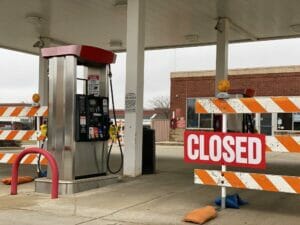
The US Virgin Islands… it sounds like paradise…unless you’re a Class A/B UST operator there and get banned from receiving fuel due to numerous UST violations.
According to the Virgin Islands Daily News, March 5, 2021 “Three One Love Service Station locations on St. Croix are barred from receiving fuel delivery because the company failed to abide by safety regulations, according to a statement issued Thursday by the V.I. Department of Planning and Natural Resources.
According to DPNR, its enforcement officers identified several violations at One Love stations, including failure to register tanks and obtain a permit to operate an underground storage tank system, failure to secure financial responsibility and coverage of insurance, and failure to obtain Class AB Operator certification training from a DPNR-approved source.”
Good Class A/B operators know to get correct training; know about pollution insurance, and know about operating permits. Don’t wait to get shut down to learn about proper management of your UST systems. Learn more about Class A/B training today and what steps you can take to avoid serious violations.
Great UST Video for Beginners
Hello new Class A/B UST operators. We came across this great video prepared by OPW,which explains in very easy-to-understand terms what parts make up a UST system. Any person new to the world of USTs will find it very useful. And special thanks to OPW for all the great convention events we’ve attended over the years.
Any questions about UST parts? Contact us anytime at [email protected] or 866-301-8265

What to look for when reviewing online UST training courses
Normally I write posts about what our customers — UST operators — should consider when shopping for the best online training experience. But this time I thought I’d help UST government agencies know what to look for when evaluating or auditing Class A/B and C UST training options.
Back in 2003, when I started doing live classroom training in Oregon, it quickly became apparent that my course, while dutifully explaining the UST rules in painstaking PowerPoint detail, wasn’t landing well with the audience. Questions I kept getting:
- What does “L4 fuel alarm” mean?
- How can I tell what method of leak detection I’m using?
- How can I get ready for a compliance inspection?
- What do I do with oily spill bucket water?
- Exactly what records must I keep?
Read More →
